
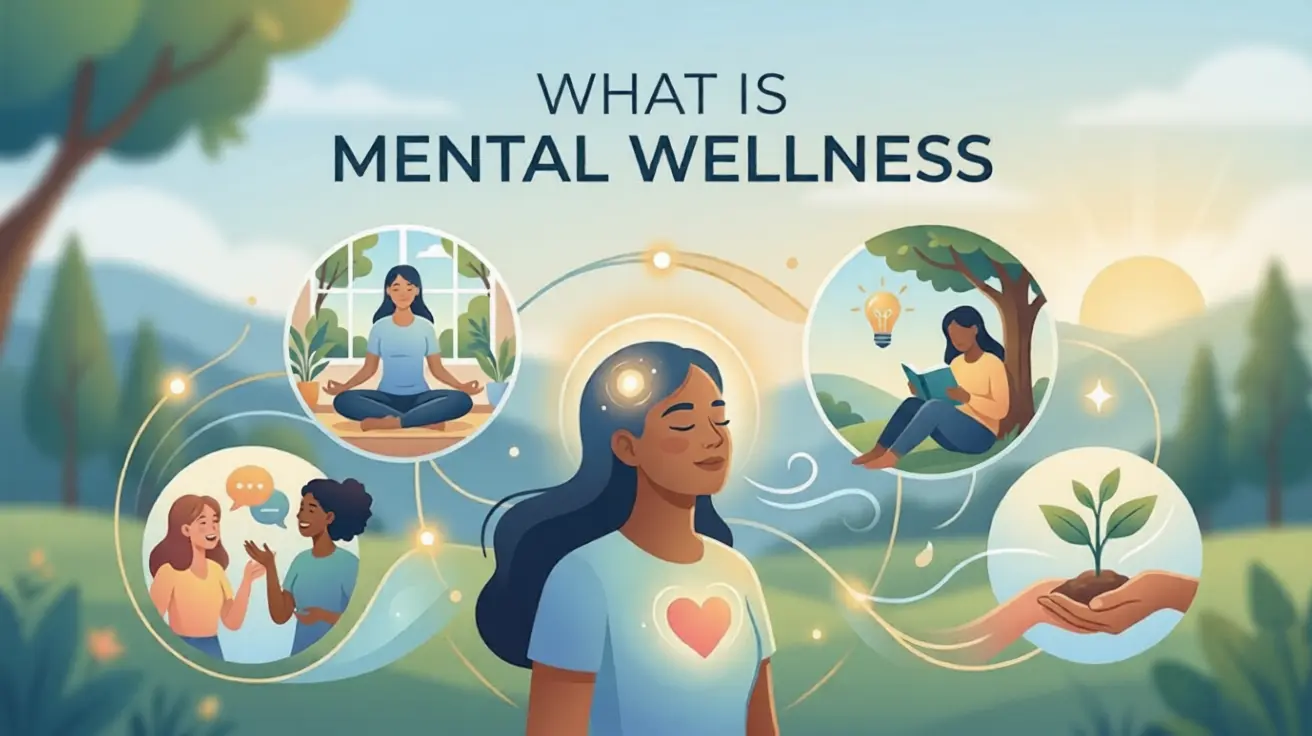
The majority of individuals only bother paying attention to something when it has broken. Your car, your roof, your health, worst of all and your mind. Mental health is not a place to go to after a breakdown. It is a habit, a decision, a lifestyle that influences the extent of how you deal with that hectic Monday morning to how much you experience joy on an empty night.
The World Health Organization(WHO) defines mental wellness as a condition that helps individuals to manage the challenges of life, to be aware of their capabilities and to serve their communities in a meaningful way. But even with all the significance, millions of individuals continue to misinterpret it as a lack of mental illness and they end up paying a high price.
By 2024, 61.5 million adults in the US had a mental health condition in the past year. The statistics are astounding. Still, the greatest insight is this and mental health is not the prerogative of persons with a diagnosis. It is the property of all people and constructing it begins today.
What Is Mental Wellness?
Picture your mind as a garden. Mental illness is a weed. Mental wellness is the daily watering, sunlight and attention that allows that garden to thrive with or without weeds.
Mental wellness is a positive psychological, emotional and social well being. It is a mirror of your thought process, emotions, coping with everyday demands, relationships with people and decision making. It is much more than a lack of a diagnosed disease.
Expert Definition:
Mental wellness is a psychological state of being that enables people to cope with the pressures of life to fulfill their potential, learn and work efficiently and serve their community.
Mental wellness is a dynamic process. It varies with your sleeping, relationships, surroundings, habits and situations in life. An individual who is doing well today may not do well tomorrow and that is okay. Whether you possess the means and the knowledge of bouncing back does not matter.
Mental wellness has three dimensions:
- Emotional wellness: how well you can identify, manage and communicate your emotions in a healthy manner.
- Psychological wellness: your ability to think, problem solve and have a balanced outlook.
- Social wellness: how well you can establish and maintain positive and healthy relationships.
Key Differences between Mental Wellness vs. Mental Health
These terms are used interchangeably by people. Nevertheless, they are not synonyms. Being able to discern the difference can mean you do the right things at the right time.
This is a brief outline:
| Aspect | Mental Health | Mental Wellness |
|---|---|---|
| Definition | Absence of mental illness | Active pursuit of optimal well-being |
| Focus | Diagnosing & treating conditions | Preventing problems & building resilience |
| Approach | Reactive; responds to problems | Proactive; builds daily habits |
| Goal | Reduce symptoms & distress | Flourish, grow & thrive |
| Who needs it? | People with diagnosed conditions | Every single person, every single day |
Imagine it in the following manner: mental health is the landscape that you are going to visit clinically and mental wellness is the path that you are going to take in your day-to-day life. You should not wait to be diagnosed before you prioritize your wellness and the most opportune time is to do it before you need it.
Why Mental Wellness Matters More Than Ever?
The world is noisier, quicker and more challenging than ever before. Alerts, time limits, social comparison and economic stress are getting more and more each day. The human psyche did not evolve in such a way as to accommodate this amount of chronic stress. And it is reflected in the data.
Why mental wellness is no longer optional:
- In 2024, 23.4% of adults in the US had a mental health condition a figure that has remained steady over the past four years.
- Around 20% of the world children and adolescents have a mental health condition cost the global economy $282 billion every year in lost productivity and healthcare costs.
- The global mental wellness market is projected to reach $235.72 billion by 2028 which is a sign of surging public awareness and demand
In addition to the figures, mental ill health uninvitingly undermines physical health. Studies have always associated chronic stress and emotional imbalances with heart disease, high blood pressure, poor immunity and metabolic disorders. There is no distinction between your body and mind they are integrated.
It is not self-indulgent to prioritize your mental health. It is a survival strategy.
The 6 Core Pillars of Mental Wellness
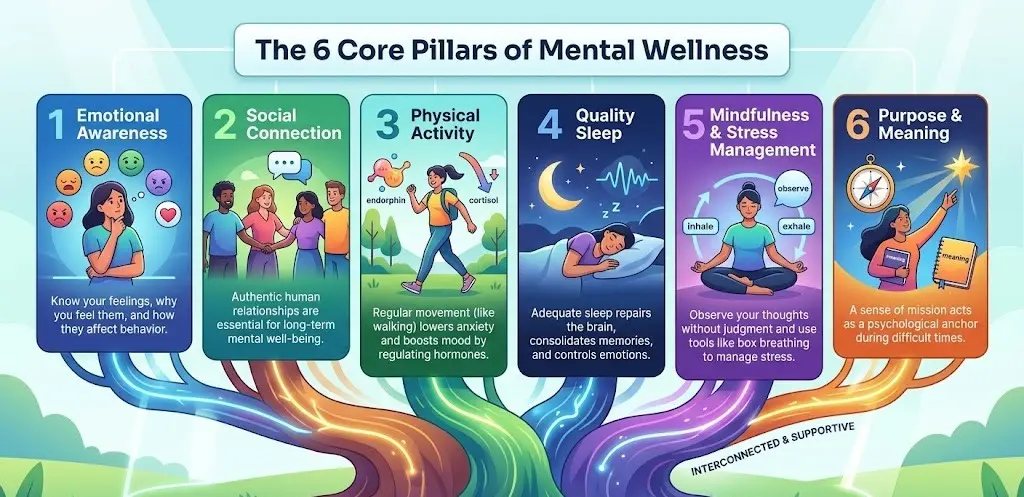
Mental wellness is not pegged on one habit. It is constructed upon six pillars that are interconnected and support each other. Make one strong and you make them all strong.
1. Emotional Awareness
The basis is emotional awareness. It is about being aware of how you feel, why you feel and how your emotions affect your behavior. Emotionally aware persons do not repress or deny their emotions. They recognize them but are not at their mercy.
Practice: Have a simple feelings journal every day. Write one of the emotions you had today and its causes. Patterns grow and with the power.
2. Social Connection
Human beings are interrelated. Loneliness is not just inconvenient, but dangerous. Studies have shown that social isolation poses as much danger to health as smoking 15 cigarettes a day. The best long term predictors of mental well being are good social ties.
Daily routine: Make one authentic human encounter per day. An in-person chat, not a series of texts but a real voice or face to face conversation, is better than virtually nothing as far as your wellbeing is concerned.
3. Physical Activity
There is a nervous system that unites your body and brain. One of the most studied interventions, exercise has been shown to lower anxiety symptoms by up to 48% and is evidence-based and can be used to treat anxiety and depression. Exercise can release endorphins, control cortisol and enhance sleep all of which are essential for mental well-being.
Everyday routine
A gym membership is unnecessary. It has been clinically established that a brisk 30 minute walk in nature will reduce stress hormones and improve mood.
4. Quality Sleep
When you sleep, it is then your brain which mends, consolidates memory and controls emotions. Nonetheless, over 100 million Americans lament that they lack adequate sleep. Sleep deprivation is devastating in the long term in relation to anxiety, depression and cognition. Quality sleep is one of the best investments in mental wellness with the highest ROI.
Practice
Have a regular bedtime even on weekends. To beat in time your mind desires. Switch on low lights an hour before sleep and switch off screens to assist the body in producing melatonin.
5. Mindfulness & Stress Management
Mindfulness has nothing to do with emptying your mind. The presence of a divide between a stressor and your response is the capacity to observe your thought, devoid of judgment. According to a study by the Cleveland Clinic, cognitive behavioral approaches and mindfulness interventions can be important in perceived stress and overall well-being.
Practice
Box breathing for 10 minutes such as inhale 4, exhale 4 and hold 4. This activates your sympathetic nervous system and disengages the stress cycle.
6. Purpose & Meaning
strength, satisfaction with life and even physical well-being. A sense of mission is a psychological anchor and it will help to stick to it in case the circumstance turns out to be difficult.
Practice
Each morning, write one thing you are looking forward to today and one thing that was meaningful yesterday. Small but frequent contemplations form an accumulating purpose.
Warning Signs Your Mental Wellness Needs Attention
Before a crisis, trouble is likely to be experienced within your mind. By knowing these red flags at an early stage, you can help change it by trying to resolve them before any minor problems turn into bigger ones.
| Emotional Warning Sign | Physical Warning Sign |
|---|---|
| Continued sadness or despair. | Fatigue or loss of energy. |
| Extreme mood swings. | Pain in the body or head without a reason. |
| Withdrawing from friends & family. | Changes in sleep (too much or too little). |
| Lack of focus or choices. | Changes in appetite (eating too much or too little). |
| Getting overwhelmed with routine. | Rapid breathing or stress. |
Important Note:
One or two of these signs are normal and occur periodically. When they extend beyond two weeks in duration and become more serious or interfere with your normal life, then it is time to consult a mental health professional. It is a strength, not a weakness, to reach out.
10 Proven Strategies to Improve Mental Wellness Daily
You do not have to completely change your life to become mentally well. Little but steady steps add up to a permanent change. These are ten strategies supported by research and life:
- Begin your day on purpose: list one goal and gratitude and touch your phone.
- Exercise daily: even 10 minutes walk will help and restructure your neurochemistry.
- Limit social media to minimize passive scrolling which is associated with anxiety.
- Connect with one actual: phone call, walk and coffee together.
- Take deep breaths or meditate a little.
- Have a balanced diet: Food has an effect on brain chemistry.
- Guard your sleeping routine: it is not the amount of hours that you sleep but it is the time that you sleep.
- Establish strict boundaries of work life:The consequence of unrest with no relaxation is burnout.
- Get out into nature: 20 minutes outside can make a big difference in cortisol reduction, not to mention elevation of mood.
- Asking for help: therapy, coaching or support groups is not the final option.
Mental Wellness at a Glance and Key Stats, Pillars & Daily Actions
The table below unites the most significant figures, pillars and daily habits all the numbers you need to learn and implement for your mental health on one page.
| Key Statistic | Mental Wellness Pillar | Daily Action |
|---|---|---|
| 1 in 5 adults face a mental health condition annually. | Emotional Balance | Journal your feelings for 5 minutes each morning. |
| 61.5 million U.S. adults affected in 2024. | Social Connection | Call or meet a friend at least once a week. |
| Exercise reduces anxiety symptoms by up to 48%. | Physical Activity | Exercise 30 minutes a day, even a brief walk will help. |
| The worldwide wellness market of $235.72 billion by 2028. | Mindfulness & Stress Relief | Meditate or do deep breathing for 10 minutes. |
| Sleep disorders affect 50+ million Americans. | Quality Sleep | Always have a regular bedtime. |
Final Thoughts
Mental wellness is not something that the fortunate few can enjoy. It is one of the most basic human necessities and an everyday practice that is open to all and no matter what our background, circumstance or history.
The most crucial lesson I have learned with the help of this guide is the following: you do not wait until a crisis strikes to develop your mental wellness. You create it with your daily decisions that will accumulate. An interview with a friend. A walk outside. Some quiet time before your morning starts.
FAQs
What is the difference between mental wellness and mental health?
Mental health is the clinical condition of your mind whether you have a diagnosable condition. Mental wellness is the effort to achieve psychological well-being whether diagnosed or not. Mental wellness practices are beneficial to everyone.
Can one be a mentally well person who is mentally sick?
Absolutely. Mental illnesses and mental wellness are not contrary. Even being depressed or anxious, a person can still develop good social bonds, exercise, be conscious and feel well even despite their condition.
What is the time frame to enhance mental wellness?
No specific time frame. Other methods such as exercise and deep breathing can cause observable changes in a few days. It will require weeks to months of practice to develop long-term emotional strength and social connection. The point is to appear every day, not ideally.
Can mental wellness be synonymous with happiness?
Not exactly. Mental wellness is more than positive emotions and goes further, it is resilience, purpose, self-awareness and being able to manage difficulty. A healthy individual may not necessarily be happy but he/she possesses the instruments that he/she can use to overcome unhappiness without necessarily being categorized by unhappiness.
What is the right time to use professional assistance in regard to my mental health?
When there is more than two weeks of persistent warning signs, when they become increasingly severe. when they start to disrupt work, relationships or daily functioning and contact a mental health professional. It is always better to intervene early rather than wait till things get out of control.