Flat energy, bloating and cravings for sugar are usually indicators of one thing: an unbalanced gut. The 7 day gut reset is aimed at correcting this imbalance over the course of 7 organized days. This daily care insights guide divides the process into daily activities, a complete meal plan, and a food list, all without starving oneself or spending a lot of money on supplements.
What You’ll Learn
- What Is a Gut Reset? Gut microbiome basics + gut-brain axis explained
- Why 7 Days Instead of a Long-Term Diet? Science behind the short-window approach
- Daily Step-by-Step Breakdown (Day 1–7): Exact action for each day plus beginner tips
- Foods to Eat vs. Avoid: Full comparison table for a gut health diet plan
- 7-Day Meal Plan: Breakfast, lunch and dinner for all 7 days
- Symptom-Based Adjustments: Custom tweaks for bloating, constipation and low energy/brain fog
- Common Beginner Mistakes: What reduces results and how to avoid it
- Long-Term Gut Health Protocol: How to maintain results after Day 7
- FAQs: Quick answers on safety, timeline, pregnancy and juice cleanse comparison
What Is a Gut Reset?
A gut reset is a temporary eating plan that decreases inflammation and supports the reestablishment of gut bacteria. It is not a fruit drink cleanse. Starvation is not involved. A gut reset involves eliminating inflammatory foods initially, then adding fiber, probiotics and prebiotics in a certain sequence.
The gut microbiome is a collection of trillions of microorganisms that exist in the human gut. A 2023 study published in Nature Reviews Gastroenterology and Hepatology found a direct correlation between immune resilience, metabolic stability and gut microbiome diversity. A microbiome with a low level of diversity enhances inflammation indicators by quantifiable levels, which justifies the co-occurrence of bloating, brain fog, and fatigue.
The gut also communicates with the brain via the gut-brain axis. It is this axis that makes stress bring about stomach pain, and why bad digestion influences mood. The Johns Hopkins Medicine review of 2022 discovered that up to 95% of serotonin is synthesized in the gut and not the brain. This alone demonstrates why a gut health protocol is more than just a digestion-fixing program, as it influences sleep, concentration and emotional control.
Why Do a 7 Day Gut Reset Instead of a Long-Term Diet?
A 7 day gut reset is effective as it is aimed at achieving a predetermined outcome within a predetermined period. Complexity is one reason why long-term diets do not work. A brief reset will provide sufficient rest to the gut to lower inflammation and remain user-friendly. The study conducted by the American Gastroenterological Association demonstrates that bloating and bowel regularity improve visibly within 5-7 days once processed sugar is cut and fiber intake is increased.
This 7 day gut reset plan is realistic for beginners due to this structure. Every day is based on the last day so the body isn’t shocked all at once.
The 7 Day Gut Reset Plan: Daily Step-by-Step Breakdown
Day 1: Eliminate Inflammatory Foods
Day 1 eliminates sugar, alcohol and caffeine from the diet. These compounds nourish toxic intestinal microbes and enhance inflammation. On this day processed snacks are substituted with whole foods. The foundation of any meal is vegetables, fruits and lean proteins.
What most novice dieters do is change everything at the same time and drop out by lunch. Begin with one meal, followed by the entire day.
Day 2: Hydration and Movement
Day 2 is concerned with water consumption and the movement of light. Water is required to move waste through the digestive tract. This is supported by 8-10 glasses of water. The greatest meal is followed by a 20-minute walk which stimulates natural gut motility.
Any action that doesn’t involve water on this day will delay all subsequent activities and thus hydration precedes any other activity that enhances the health of the gut.
Day 3: Introduce Probiotics
Day 3 puts live bacteria back into the gut with fermented foods. Probiotics are found in yogurt, kefir, buttermilk and fermented vegetables. It only takes a single serving to add to lunch or dinner to begin to repopulate the gut with the good bacteria.
Day 4: Support the Gut Lining
Day 4 is aimed at the intestinal wall. Raw vegetables are harder to digest than cooked vegetables on this day. Glutamine, an amino acid that aids in repairing the gut lining, is found in bone broth or vegetable broth. Recent research published in the Journal of Clinical Medicine (2021) found a correlation between improving intestinal permeability often referred to as a leaky gut and glutamine supplementation.
Day 5: Feed Good Bacteria With Prebiotics
Prebiotic fiber is introduced on Day 5. The probiotics that are added on Day 3 are fed on by garlic, onions, green bananas and beans. Prebiotics and probiotics are complementary to each other; one of them fills the gut up the other fills it up.
Day 6: Rest the Digestive System
Day 6 provides the gut with a rest period due to a specific eating plan. A 12-hour eating period, like 7 am to 7 pm, lowers continuous digestive activity. Meals in between are avoided and the gut cleanses of remaining waste on this day.
Day 7: Mindful Eating and Long-Term Habits
On Day 7, the eating process itself is slowed down. Digestion starts in the mouth, not the stomach, by chewing each bite about 20 times. The action minimises gas and bloating as the digestion process begins sooner.
7 Day Gut Reset Quick Reference
| Day | Focus Area | Primary Action | Beginner Tip |
|---|---|---|---|
| 1 | Eliminate irritants | Remove sugar, alcohol, caffeine | Cut one meal at a time |
| 2 | Hydration | Drink 8–10 glasses of water | Add lemon for taste |
| 3 | Probiotics | Add yogurt, kefir, or pickles | One serving is enough |
| 4 | Gut lining repair | Drink bone or vegetable broth | Avoid raw salads today |
| 5 | Prebiotics | Eat garlic, onion, green banana | Pair with Day 3 probiotics |
| 6 | Digestive rest | Use a 12-hour eating window | No snacks after dinner |
| 7 | Mindful eating | Chew each bite 20 times | Track how you feel |
Gut Health Diet Plan: Foods to Eat and Foods to Avoid
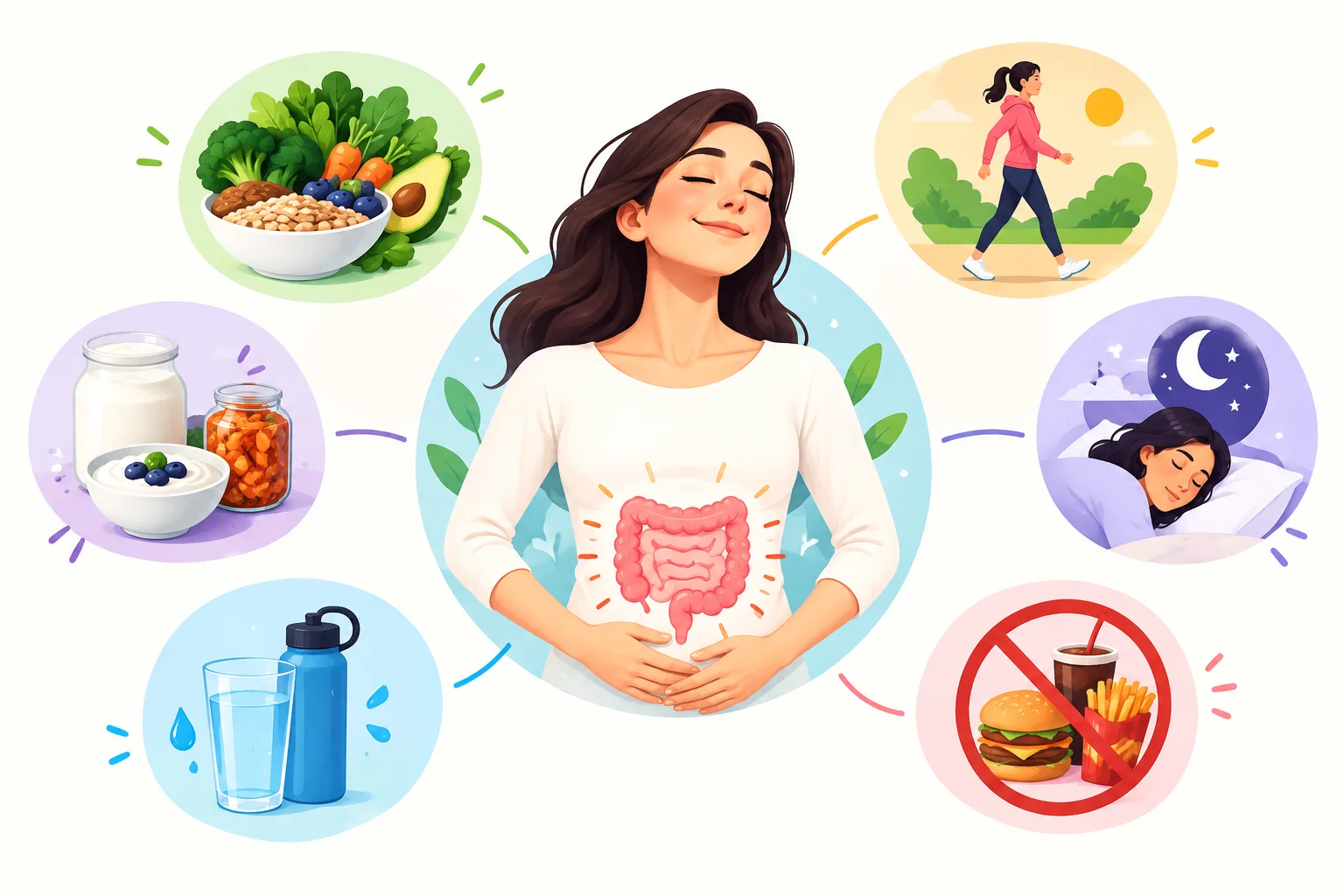
The gut health diet plan relies on two types of food: fiber-rich foods that nourish healthy bacteria, and processed foods that nourish unhealthy bacteria. The two groups are clearly divided in the table below.
Foods to Eat vs Foods to Avoid
| Foods to Eat | Foods to Avoid |
|---|---|
| Broccoli, cabbage, leafy greens | Soda, candy, pastries |
| Apples with skin, bananas, prunes | White bread, white pasta |
| Chickpeas, lentils, kidney beans | Fried snacks with refined oils |
| Garlic, onions, leeks | High-fructose sauces and dressings |
| Yogurt, kefir, fermented pickles | Excess caffeine |
| Walnuts, chia seeds, flaxseed | Alcohol |
Plain dahi, lassi and homemade achaar are simple, local, inexpensive options with the same probiotic value as imported kefir or kimchi. Chana and daal provide the same prebiotic fiber as imported legumes at a lower price.
7 Day Gut Reset Meal Plan
This 7 day gut reset diet plan transforms the day-to-day areas of focus into real meals. The following table provides an example of a practical schedule for the entire week.
Sample 7-Day Meal Plan
| Day | Breakfast | Lunch | Dinner |
|---|---|---|---|
| 1 | Oats with banana | Grilled chicken with steamed vegetables | Vegetable soup |
| 2 | Greek yogurt with flaxseed | Lentil soup with brown rice | Baked fish with salad |
| 3 | Kefir smoothie with spinach | Chickpea salad with olive oil | Grilled vegetables with quinoa |
| 4 | Scrambled eggs with spinach | Vegetable broth with soft-cooked carrots | Steamed sweet potato with cabbage |
| 5 | Overnight oats with chia seeds | Bean and barley soup | Stir-fried tofu with garlic and onion |
| 6 | Yogurt parfait with pomegranate | Black bean wrap with avocado | Turkey chili with vegetables |
| 7 | Chia pudding with fruit | Minestrone | Grilled shrimp with wild rice |
This gut reset meal plan maintains realistic portions. It is not aggressive in calorie restriction, as excessive calorie restriction usually leads to the same inflammation that the reset is meant to decrease.
Symptom-Based Adjustments
All intestinal problems cannot be addressed by the same measure. The subsequent changes are aimed at certain symptoms during the same period (7 days).
- Bloating: Minimise raw vegetables on Days 1-3. Cooked vegetables are easier to digest and cause less gas.
- Constipation: Take more water than on Day 2 and one additional serving of fiber each day.
- Low energy or brain fog: Focus on Day 4 gut lining repair step earlier in the week, as the improvement of energy is usually preceded by a reduction in inflammation.
Common Mistakes Beginners Make During a Gut Reset
Three errors undermine the success of a digestive detox plan more than food omissions:
- Cutting everything on Day 1. Slowly eliminating sugar and caffeine will result in fewer withdrawal symptoms as compared to quitting at once.
- Adding probiotics without fiber. Probiotics without prebiotic fiber die off faster in the gut according to a 2020 study in Cell Host & Microbe.
- Underestimating water intake. Fiber taken without enough water can worsen constipation rather than relieve it.
Long-Term Gut Health Protocol After the 7 Days
A gut health protocol is not confined to a week. The routines established in the reset require a maintenance framework to sustain.
- Continue with 1 serving of fermented foods per day after Day 7.
- Continue the 12-hour eating window that was on Day 6 as a new routine.
- Eliminated foods can be reintroduced gradually, one category at a time, to find out which foods trigger symptoms.
- Arrange an appointment with a gastroenterologist or dietitian in case of persistence of bloating or irregularity after two weeks.
FAQs
What is a 7 day gut reset?
A gut reset is a 7 day program that eliminates inflammatory foods, supplements probiotics and prebiotics and heals the gut lining through diet and hydration.
Is a gut reset a juice cleanse?
No. A gut reset consists of entire meals that contain protein, fiber, and fat. A juice cleanse limits calories and tends to eliminate fiber which may aggravate the gut bacteria balance.
Is a gut reset safe with beginners?
Yes, non-experts can safely adhere to this plan by making changes during the 7 days and not all at the same time. Any person who already has a digestive condition should seek the advice of a doctor.
Which foods are not to be included in a digestive detox plan?
Refined sugar, alcohol, fried snacks and artificial sweeteners are to be avoided as they nourish harmful gut bacteria and enhance inflammation.
When will I start getting benefits of a gut health plan?
According to the results of the American Gastroenterological Association, the majority of individuals report a decrease in bloating and a more regular digestion process within 5-7 days.
Will I be able to take this gut reset meal plan when pregnant or breastfeeding?
Any elimination-based diet, such as this, should not be used by pregnant or breastfeeding women without consulting a doctor as nutrient requirements are different at this stage.
Conclusion
A 7 day gut reset is a sequence-based intervention, not restriction-based. Day 1 removes irritants. Days 3-5 restore bacterial equilibrium. The habits from Days 6 and 7 are meant to outlast the week itself. The best results are observed by readers who adhere to this gut health diet plan step-by-step, instead of jumping forward. This gut health protocol will be updated by Daily Care Insights as new microbiome research gets published.