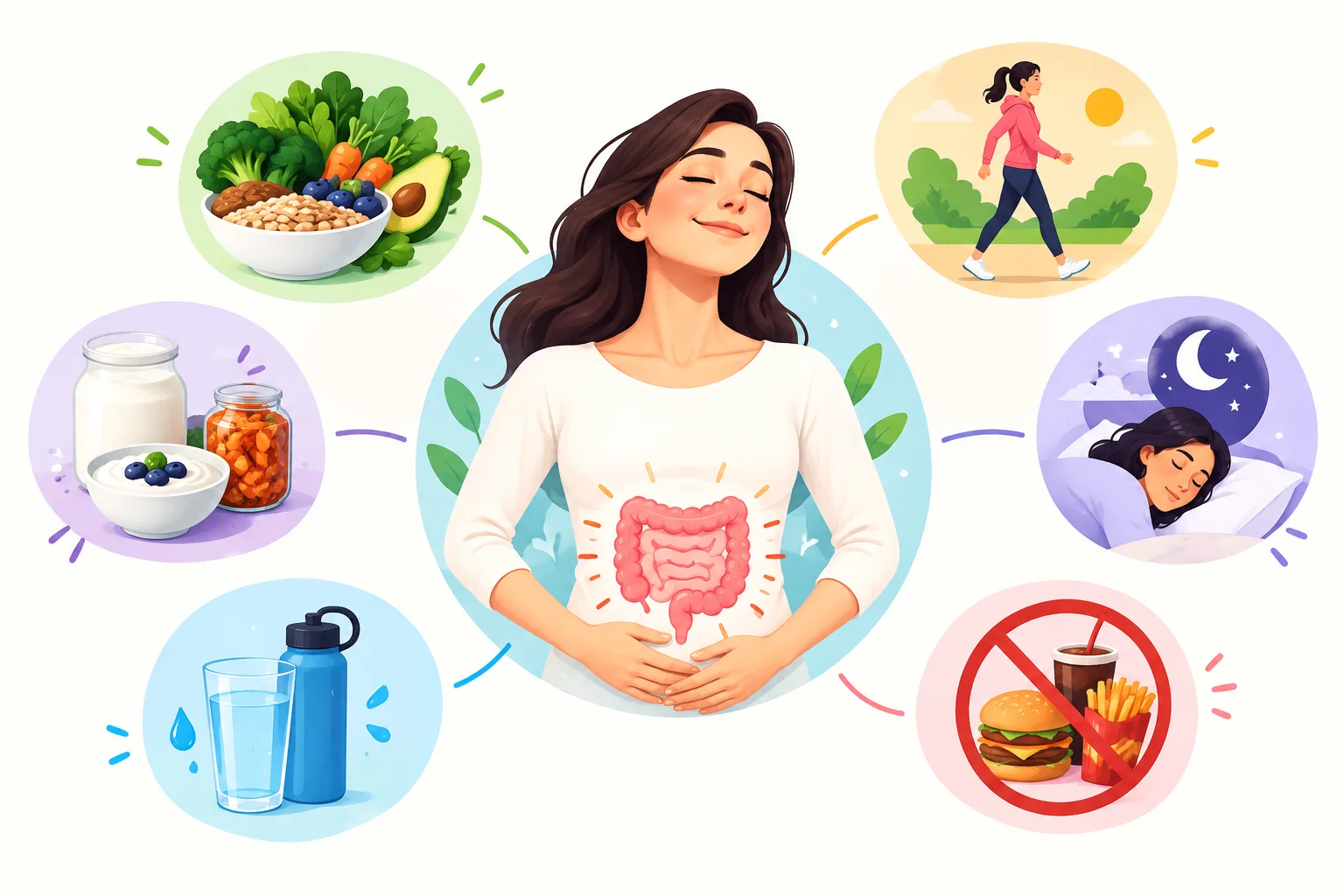
You can improve gut health by eating more fiber, adding fermented foods, walking after meals, sleeping 7–9 hours, and managing stress. These habits work together. Small changes you repeat daily matter more than any one-time cleanse.
At Daily Care Insights, we focus on habits you can actually keep. This guide covers ten habits that improve gut health. It also covers the warning signs, healing signs, and recovery timelines most articles skip.
How Can You Speed Up Digestion?
How can you speed up digestion without pills? Walk after meals, chew slowly, eat fiber, drink water, and keep regular meal times. Each step supports a different stage of the process.
Mayo Clinic reports that food takes about six hours to move through the stomach and small intestine. The colon then needs up to 36 to 48 hours. A full meal takes about two days to pass through your body. Your daily habits decide whether that clock runs smoothly.
10 Simple Daily Habits to Improve Gut Health
1. Eat More Fiber Every Day
Fiber feeds your gut bacteria. Those bacteria turn it into short-chain fatty acids, which support your intestinal lining.
Most people eat too little. US adults average about 15 grams daily. Many gastroenterology practices suggest 25–30 grams for adults. Add fiber slowly, because a sudden jump causes gas.
Start with oats, lentils, beans, apples, and leafy greens.
2. Walk for 10–15 Minutes After Meals
Walking is the simplest way to support your gut microbiome and digestion at once. It stimulates the muscles of your digestive tract.
A 2021 randomized trial tested this. Adults with bloating walked 10 to 15 minutes after every meal for four weeks. They reported less belching, gas, and bloating. An earlier 2008 study found that post-meal walking sped up gastric emptying. Alcoholic digestifs and espresso did not.
Cleveland Clinic gastroenterologist Dr. Jessica Philpott says even standing up or walking around the house may help.
3. Add Digestion Booster Foods
The best digestion booster foods combine fiber, water, and prebiotics. Rotate them through the week.
| Food | Why it helps | Easy way to eat it |
|---|---|---|
| Oats | Soluble fiber, prebiotic | Overnight oats |
| Bananas | Fiber and inulin, which feeds good bacteria | Snack or smoothie |
| Leafy greens | Fiber and a sugar that fuels healthy bacteria | Salad, soup |
| Lentils and chickpeas | Prebiotic fiber | Curry, salad |
| Ginger and peppermint tea | Soothes mild cramping | After meals |
| Yogurt or kefir | Live cultures | Breakfast |
Johns Hopkins notes that bananas contain inulin, which stimulates the growth of good bacteria. It also notes that whole grains help your colon work better.
4. Choose the Best Fermented Vegetables
The best fermented vegetables to improve gut health are the ones that still contain live cultures. Many shelf-stable jars do not.
Stanford researchers studied this in a 10-week trial of 36 adults. The fermented-food group showed higher microbial diversity. Their blood also showed a drop in 19 inflammatory markers, including interleukin-6. The high-fiber group did not show those changes. The foods included yogurt, kefir, kimchi, and other fermented vegetables, according to the Stanford Medicine report.

| Fermented vegetable | Notes |
|---|---|
| Kimchi | Spicy, rich in varied microbes |
| Sauerkraut (unpasteurized) | Mild, easy to add to meals |
| Fermented carrots or beets | Good for beginners |
| Brine-fermented cucumbers | Choose brine, not vinegar pickles |
| Miso and tempeh | Fermented soy options |
Check the label. The Canadian Digestive Health Foundation warns that heating, pasteurizing, or filtering can kill the live microorganisms. Look for “live and active cultures.” Start with one spoonful a day.
5. Chew Slowly and Eat Mindfully
Digestion starts in your mouth. Chewing is the only mechanical breakdown in the whole digestive process.
Put your fork down between bites. Skip screens at meals. You swallow less air and feel fullness sooner.
6. Drink Water Through the Day
Water softens stool and helps food move, so it can improve gut health over time. Sip steadily instead of drinking large amounts at once.
Dehydration slows digestion. It can bring constipation, bloating, and cramps. Add peppermint or ginger tea if you want something warm.
7. Keep Regular Meal Times
Your gut has its own internal clock. A 2025 review in Nutrients found that consistent meal timing supports digestion and gut bacteria balance.
Eat at similar times each day. Avoid heavy meals right before bed.
8. Sleep 7–9 Hours
Poor sleep affects your gut bacteria. Canadian guidelines recommend 7 to 9 hours for adults aged 18 to 64.
Keep a fixed bedtime. Your gut repairs itself overnight. For a full bedtime routine, read our sleep hygiene guide.
9. Manage Stress Daily
The gut-brain axis links your nervous system to your digestion. Digestion works best when your “rest and digest” system is more active than your “fight or flight” system.
Try ten minutes of deep breathing, a quiet walk, or gentle yoga. Pick one you will repeat.
10. Limit Ultra-Processed Foods and Use Antibiotics Wisely
Low-fiber, high-sugar foods give your good bacteria little to eat. Swap chips for roasted chickpeas. Swap sugary cereal for oats with fruit. Small swaps like these improve gut health without a strict diet.
Take antibiotics only when your doctor prescribes them. Finish the full course. Antibiotics fight infections, but they also reduce healthy bacteria.
Signs of Bad Gut Health
Signs of bad gut health include frequent bloating, gas, constipation, diarrhea, heartburn, and fatigue. No single symptom proves a problem, because many conditions cause the same signs.For a deeper breakdown of each symptom, read our signs of poor gut health guide.
| Sign | What it may mean |
|---|---|
| Bloating after most meals | Possible diet trigger or slow digestion |
| Constipation or diarrhea | Low fiber, low water, or gut imbalance |
| Heartburn | Reflux or a trigger food |
| Tiredness | Poor sleep or poor nutrient absorption |
| Food intolerances | Possible link to gut bacteria balance |
Signs Your Gut Is Healing
Signs your gut is healing show up gradually. You will usually notice less discomfort first.
| Healing sign | What you notice |
|---|---|
| Less bloating | Flatter stomach after meals |
| Regular bowel movements | Comfortable, predictable pattern |
| Less gas and cramping | Fewer evenings of discomfort |
| Better energy | Fewer afternoon crashes |
| Better food tolerance | Foods you avoided feel fine again |
Track your symptoms weekly. Patterns appear faster on paper than in memory.
How Long Does It Take to Heal Your Gut?
How long does it take to heal your gut? Expect weeks for symptom relief and about 10 weeks to several months for lasting microbiome change. Recovery after antibiotics can take longer.
| Timeframe | What research shows |
|---|---|
| A few days | Diet changes can shift gut bacteria quickly |
| 4 weeks | Post-meal walking trial showed less bloating and gas |
| 10 weeks | Stanford trial showed higher diversity and lower inflammation |
| 6 weeks to 6 months | Recovery window after antibiotics |
The Canadian Digestive Health Foundation cautions that short-term changes differ from lasting improvements. It also advises against quick “gut resets.”
After antibiotics, Palleja and colleagues followed 12 healthy men. Most bacterial communities recovered after about six months. A systematic review of common antibiotics reported recovery between 14 and 42 days or more, depending on the study. Recovery varies with the drug, the dose, and your age.
When Should You See a Doctor?
See a doctor if you notice blood in your stool, unexplained weight loss, or severe abdominal pain. Also book a visit if symptoms last or worsen, or if heartburn continues for more than two weeks.
Daily habits support digestion. They do not replace a medical diagnosis.
FAQs
What is the fastest way to speed up digestion?
Take a gentle walk after meals. Add fiber, water, and slow chewing for lasting results.
What are the best fermented vegetables for gut health?
Unpasteurized kimchi and sauerkraut work well. Choose refrigerated products with live cultures.
How long does it take to heal your gut?
Symptoms often improve within weeks. Microbiome diversity usually needs 10 weeks or longer.
What are signs of bad gut health?
Bloating, gas, constipation, diarrhea, and heartburn are common signs. See a doctor if they persist.
Do I need a probiotic supplement?
Not always. Probiotic effects depend on the strain, so ask your doctor first.
Final Thoughts
You can improve gut health without a complicated plan. Walk after meals, eat more fiber, add live fermented vegetables, sleep well, and manage stress. Give each change a few weeks, then track your progress. Need an easy way to start? Build these habits into your morning routine.
Daily Care Insights will keep sharing simple, research-based habits like these.