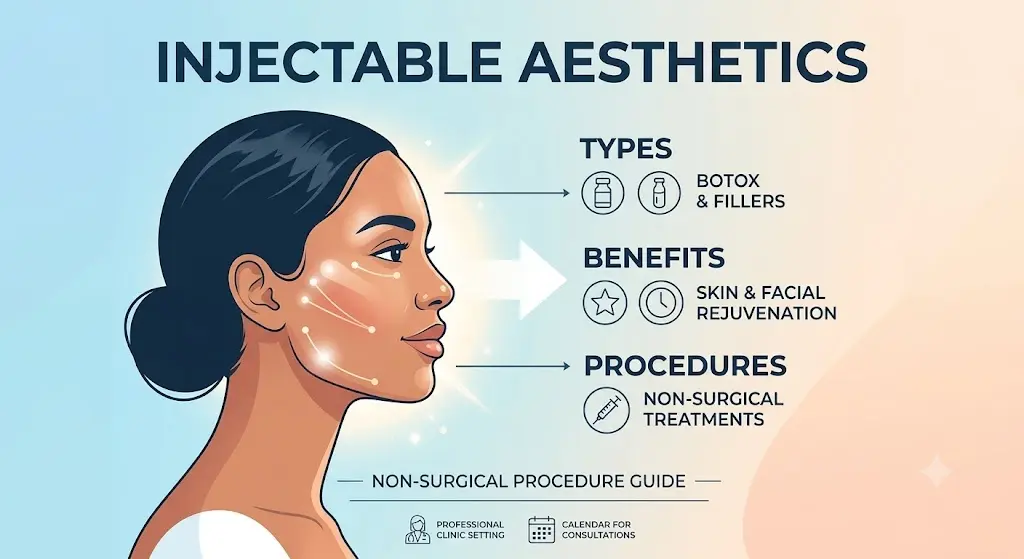
Step into any contemporary dermatology clinic today and you will see that the one thing you will find striking is that the waiting area is more like a spa than a hospital. This transformation reflects how injectable aesthetics has reshaped the beauty industry. Injectable aesthetics is an umbrella term for any cosmetic treatment that involves minimally invasive injection techniques to relax muscle tension, restore volume or trigger the body’s own healing processes, with no single incision required. According to industry data, the global aesthetic injectables market is set to reach USD 6.2 billion by 2025 and further rise to over USD 14 billion by 2033 with an annual compound growth rate exceeding 10%.
No longer is prevention an issue for those over 40 years old. Instead of a ‘quick fix’ for visible aging, younger patients choose Botox, dermal fillers and PRP therapy as part of a long-term skin care plan. In a recent year, Botox was the most performed non-surgical cosmetic procedure in the world with over 9 million treatments. At Daily Care Insights, This guide explains everything you need to know about injectable aesthetics, who it is best for, and what you can expect to achieve before, during and after treatment.
Understanding Injectable Aesthetics
What are Injectable Aesthetics?
Injectable Aesthetics is any cosmetic procedure that is not performed with a scalpel. These procedures are recommended by a licensed dermatologist, plastic surgeon or a specially trained nurse using FDA-approved products or CE-approved products and sterile techniques under strict medical supervision. Patients sit for a brief consultation, get the injection in the clinic and are usually able to walk around in 30 to 45 minutes. Safety is very important here; good clinics always check the medical history, any medications being taken and any allergy profile before giving a patient one injection.
How Injectable Aesthetics Work
Every injection affects a different layer or function of the face. Botox blocks nerve signals to muscles, thus eliminating the dynamic wrinkles resulting from frequent use of those muscles, such as when you frown or squint. By contrast, dermal fillers provide dermal volume through the addition of hyaluronic acid or other biocompatible fillers, immediately rejuvenating lost structure.And that is precisely the point at which PRP therapy comes into play blood taken from the patient’s own body is used to obtain PRP and injected into targeted treatment areas to stimulate the healing process and boost collagen production. Complications are far less common with these types of noninvasive procedures than with surgical procedures, as general anesthesia is not required and Most patients return to normal activities the same day of having the procedure performed.
Types of Injectable Treatments
Botox Treatment
Botox is commonly used to treat dynamic wrinkles. The forehead, the lines between the eyes or the crow’s feet around the eyes are among the areas that doctors focus on. The whole process lasts about 10 to 15 minutes and the sensation felt during the procedure is not actually pain but rather a quick pinch. Initial improvements appear within 3–5 days, with full results developing in about two weeks and can persist for 3 to 4 months on average. Recent reports on the market indicate that Botox-type treatments increased by more than 4% within a single year, simply showing how predictable the return of patients for repeated treatments is.
Dermal Fillers
Whereas dermal fillers are used to solve a whole different problem lost volume. Lips, cheeks, under-eye hollows, and the jawline are popular areas for hyaluronic acid fillers. The overwhelming majority of fillers on the market are hyaluronic acid with a share of nearly 80%, due to its natural-looking results and reversibility. One session will typically treat one or two areas and the recovery timeframe is typically two days, although some swelling or bruising may occur for a short period of time.
PRP Therapy
PRP therapy utilizes the body’s natural healing power. The treatment is made from the patient’s own plasma, making allergic reactions very rare, hence making it an appealing treatment to patients who prefer a more natural method to face rejuvenation. Patients can see improvement in their skin color and tone within a few weeks, since collagen regeneration happens slowly and steadily. To take the anti-aging benefits that many patients are seeking to the max many clinics now combine PRP with microneedling.
Facial Contouring Injections
Facial contouring injections provide patients with a sculpted look, without touching a scalpel to a surgical site. To add more angles and give face better balance, fillers are strategically loaded along jawline, chin and cheekbones. Often used alongside Botox, it is a go-to method for those who wish to achieve a more ‘chiseled’ look in photos and video calls, and has become a popular choice with patients for an all-around, full-face facelift.
Table 1 — Injectable Treatments Overview
| Treatment | Purpose | Main Benefits | Typical Recovery Time |
| Botox | Reduces wrinkles and fine lines | Smooth, refreshed facial lines | 3-5 days |
| Dermal Fillers | Restores volume and contour | Enhanced facial structure | 1-2 days |
| PRP Therapy | Rejuvenates skin naturally | Natural glow and anti-aging effect | 1-3 days |
| Facial Contouring Injections | Sculpts and defines facial features | Defined jawline and cheeks | 1-2 days |
Benefits of Injectable Aesthetics
Facial Rejuvenation & Youthful Appearance
When patients are seeking Anti-aging injectables, they are usually interested in looking as active as they feel. More than 90% of people who opt for fillers find them to be either improved or very much improved which is comparable to surgical procedures or even higher in satisfaction rates. With time, continued use allows the emergence of a more textured skin as the volume returns to the hollows and the fine lines disappear.
Minimally Invasive & Low Downtime
With surgery, weeks of convalescence are required, while a few days are all that’s needed with the Injectable skin rejuvenation. Most patients can return to work or social activities within hours, as opposed to weeks, which is a survey favorite and considered a key advantage of the procedure over facelifts and other surgeries. Fewer downtime days also mean fewer risks as there are fewer days for possible complications such as infections to occur.
Customized Treatments
There is no uniform face and no one’s face can look the same after treatment. Hair Botox has nothing to do with facial injectable aesthetics based on the individual’s skin laxity, goals and bone structure. That is why combination therapy using two or more different types of injections at the same time is continuing to increase in pace compared to any single injection therapy by itself.
Table 2 — Key Benefits of Injectable Treatments
| Benefit | Explanation |
| Reduced Wrinkles | Smoother skin and softened facial lines |
| Enhanced Volume | Fuller lips, cheeks, and balanced facial features |
| Skin Rejuvenation | Brighter, more youthful-looking skin |
| Minimal Downtime | Quick recovery suited to busy schedules |
| Non-Surgical Enhancement | Visible results without surgical risk |
Who Should Consider Injectable Aesthetics
The average age range is from late 20s to mid-60s, although the actual age is more dependent on specific injectable skin rejuvenation issues than any specific age. Patients in their early years may choose to have preventive Botox to prevent deeper lines, patients in their 40’s and 50’s may opt for fillers or PRP to restore volume. Typically, good candidates are healthy, have realistic expectations and refrain from taking blood-thinning medication before their appointment.
There are some precautions to take when certain conditions are present. If you are pregnant or nursing have a current skin infection where you are getting an injection or have certain neuromuscular diseases talk to your physician before any injection procedure. As always, a good provider will check for them at the consultation and not afterwards.
Procedure Process and Safety Guidelines
Consultation and Assessment
A comprehensive consultation is the perfect first step to a safe injectable journey. Provider reviews the anatomy of the Non-surgical facial aesthetics face and discusses what they think the patient is looking for in their aesthetics, and suggests what treatment or treatments will most likely achieve a natural-looking result. This is one of the biggest indicators that can be encountered at any clinic that a patient can look for if they do not do this.
During the Procedure
Patients will be treated in a clean, well-lit treatment room and a small amount of numbing will be performed before injections. The provider identifies injection points, injects in small controlled doses and monitors symmetry throughout the session. Most appointments last around an hour with preparation and giving instructions after the process.
Aftercare and Results
Aftercare is a way to safeguard the investment made by patients. Rest, no alcoholic beverages and limited sun exposure are recommended by providers for the first 24 hours. The patient should avoid touching the treatment area without instructions to do so as this can displace the filler until it has been fully set.
Common Misconceptions About Injectable Aesthetics
Thin needles and topical numbing cream make most new patients say they experience very little pain. Another misconception is instant results with Botox that look the same for everyone. In fact, Botox results start to show after 3 to 5 days and PRP results take several weeks to develop. The third misconception of injectable aesthetics is that results are permanently obtained. They do not. Botox typically works for 3-4 months, fillers last for between 6 months and 2 years depending on the product and PRP treatments need to be repeated on a regular basis to maintain the glow. .
Frequently Asked Questions
What is the difference between Botox and dermal fillers?
Botox will relax the muscles to help those dynamic wrinkles that are brought on by movement, while dermal fillers will add volume to help restore structure lost over time.
Does PRP therapy work for all?
PRP does not contain blood from other people so there are very few chances of allergic reactions, but those with some blood disorders or infections should seek medical advice first.
How long after the injection will the treatment be effective?
Botox lasts for 3-4 months, dermal fillers for 6 months to 2 years and PRP can last for months and require touch ups every few months.
Does it have any side effects?
Swelling, redness or bruising may occur at the injection site but this is temporary and will resolve within a few days.
When should the treatments be repeated?
Most patients get hair botox treatment every 3-4 months, fillers every 6-18 months and PRP every 4-6 weeks for a series of treatments and then maintenance treatments.
Conclusion
In 2026, Injectable Aesthetics has transformed the concept of facial rejuvenation, replacing the need for scalpel, weeks of downtime with just a needle and instant results. Every treatment addresses a particular concern, and the best results typically are achieved when the treatments are tailored to a patient’s specific needs by a skilled provider. The facts tell the whole story: A market expected to reach USD 14 billion in ten years; satisfaction rates well in excess of 90%, and the number of treatments being performed by millions, year after year, clearly demonstrates that patients have trust in these methods more now than ever.
Before booking any treatment, take time to do your research, ask lots of questions and set your expectations accordingly. Daily Care Insights urges all readers to make safe, educated, and professionally advised decisions. The safest rules in injectable aesthetics are “first the safety, second the vanity.”